Critter of the Quarter - Ladybug
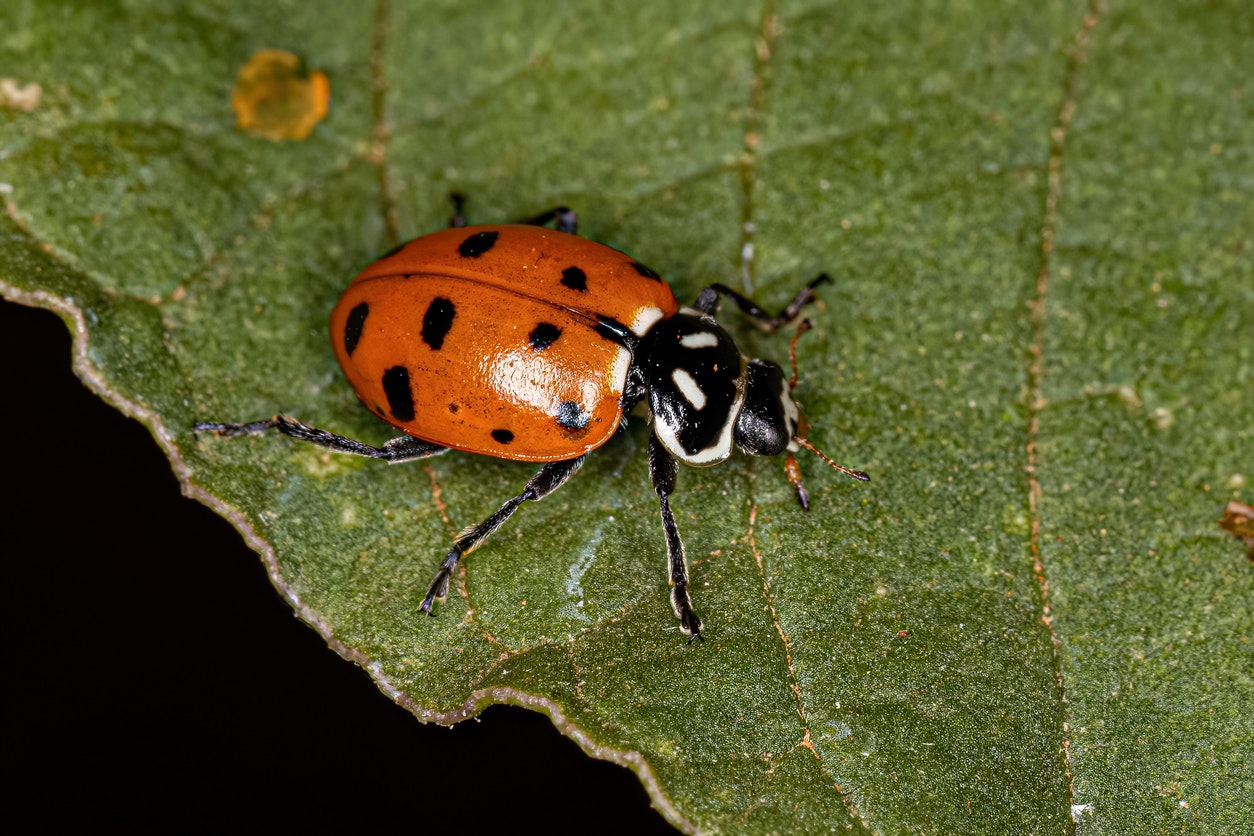
Meet the Convergent Lady Beetle (Hippodamia convergens), also known as ladybird beetles or ladybugs. It has a hard, shiny body with wing covers that are orange and commonly have 13 spots. Some individuals may have fewer or no spots. This species is named after the two distinct white markings on the thorax that are angled towards each other (convergent markings).
Ladybugs develop through four life stages: egg, larva, pupa, and adult. Adult females can lay hundreds of eggs during spring and early summer. Eggs are usually deposited near prey, such as aphids, in small clusters in protected places like leaves and stems. As the larvae emerges, it begins eating immediately and will go through four stages of molt before developing its hard outer shell.
Ladybugs typically eat soft-bodied insects like aphids, scale insects, and plant mites, acting as natural pest control for gardens. To attract them, plant nectar-rich flowers, provide water, and avoid pesticides.